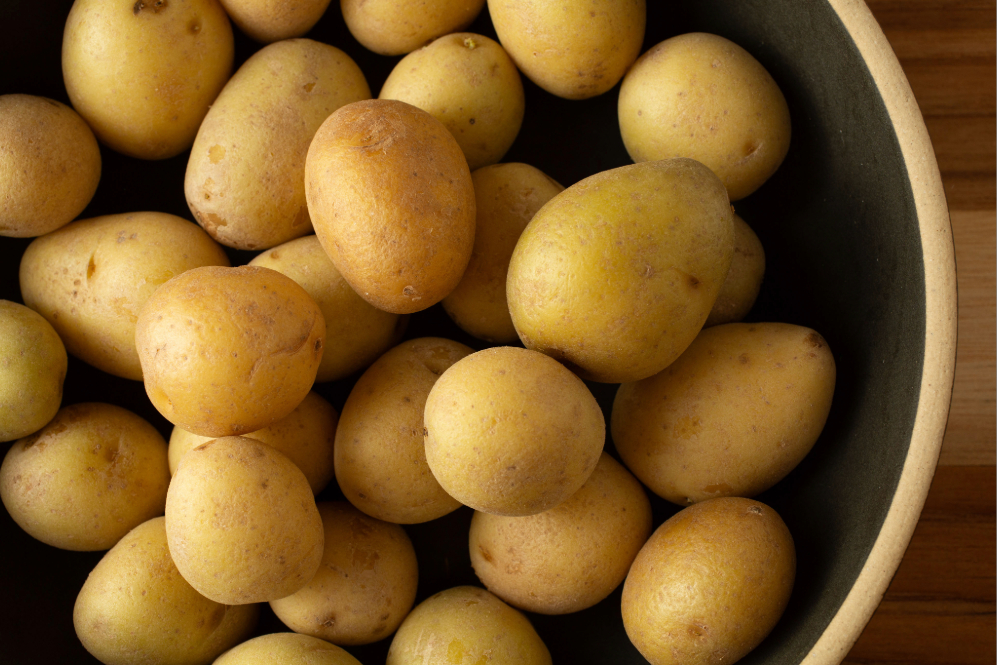
THERE’S nothing quite like growing your own potatoes – and if you act now, you can still get a harvest for Christmas.
Early September is realistically the last chance to plant a winter variety if you want to enjoy a late harvest, so time is running out.
Planting for a winter harvest is an ideal way to keep something growing in the garden as we head into the dormant months – and will give you something to nurture while there’s not a lot else happening.
Choose your spuds wisely. Because we’re dealing with cooler weather and shorter days, you need to ensure you choose the right potatoes for the job.
Cold-stored potato tubers can be bought from specialist seed companies and many garden centres which are seed potatoes from late last winter which have been held back ready to be planted later in the year.
The life cycle of potato plants is around 12 weeks from planting to harvest, so planting now should deliver a crop in early-mid December.
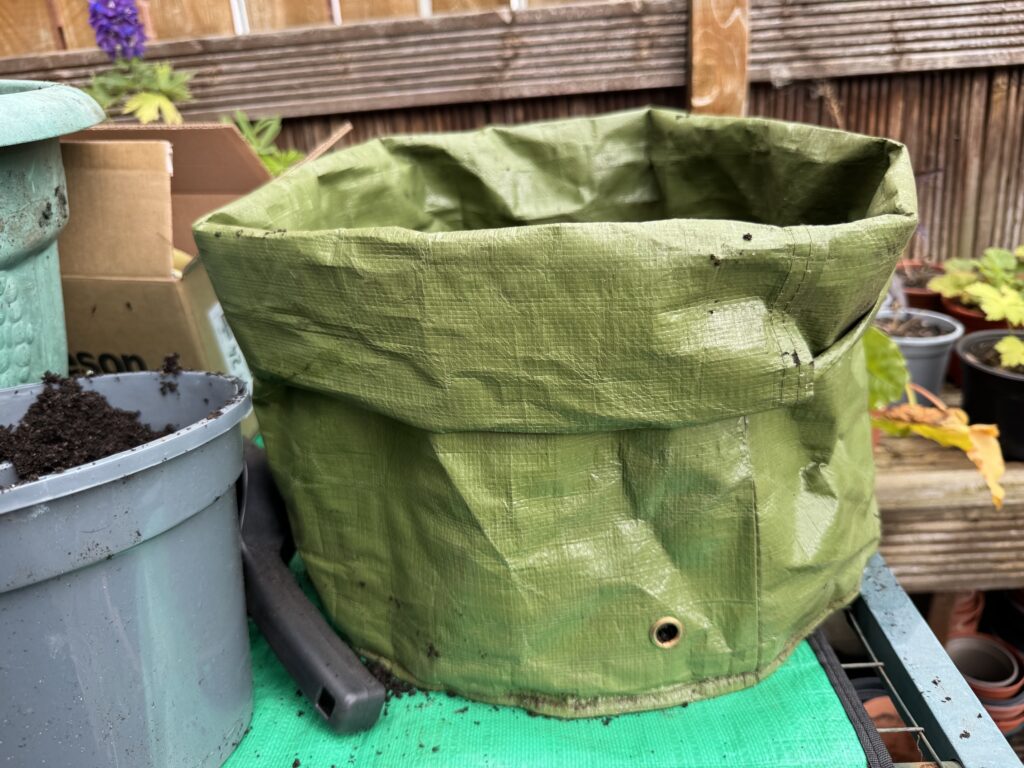
They can be planted in exactly the same way as potatoes at any other time of the year – directly into the ground, in potato sacks or large pots and containers.
If you don’t have a big garden or access to a good bed, potato sacks are perfect. Local garden centres like Elm Tree or Clays are a good place to buy locally, but they’re also readily available online at Amazon, B&Q and plenty of other places.
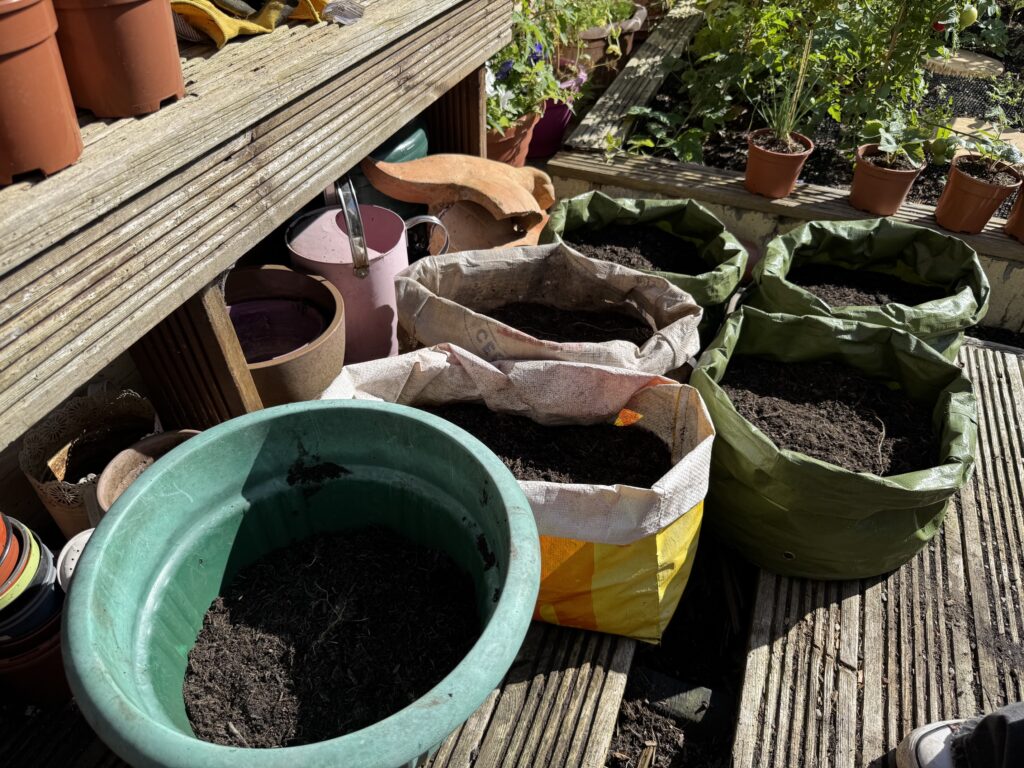
Alternatively, I’ve discovered from my summer growing this year that the large supermarket carry bags are just as good, just make sure you pierce some holes at the bottom so excess water can drain away.
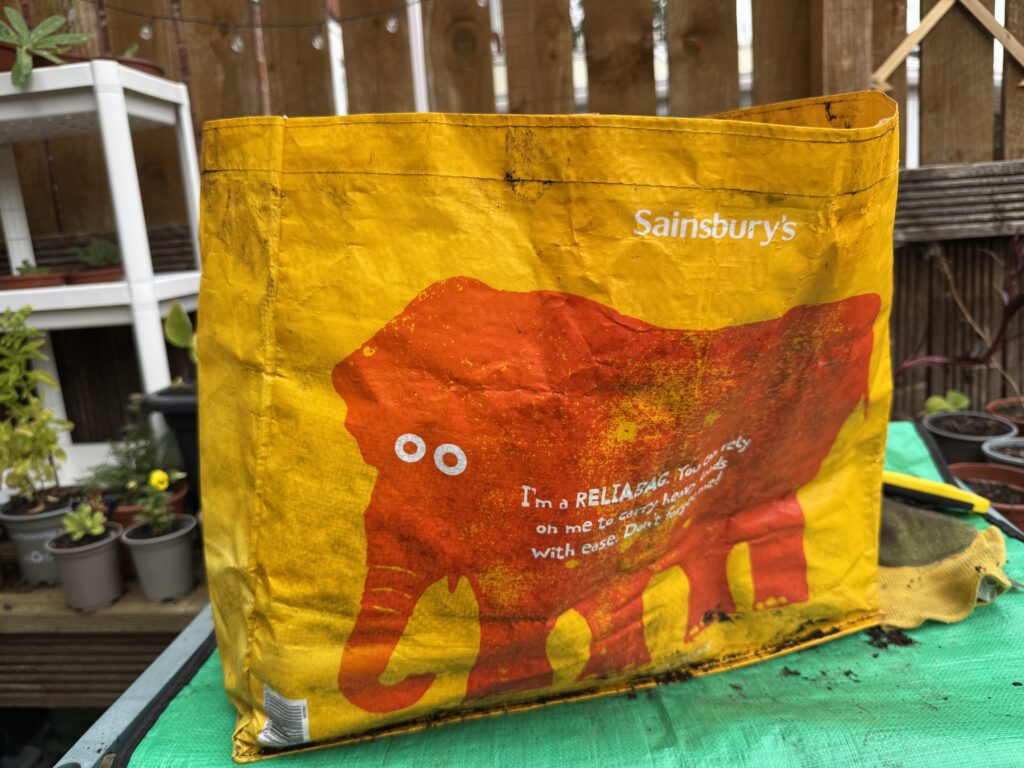
I got as many potatoes in my shopping bags as I did from my proper sacks and they take up even less space, which makes them perfect for small gardens or yards. You can also use a large container, as long as it’s at least 30cms wide and deep.
Ideally potatoes will have been chitted (allowed to stand out to grow small shoots to get a head start) but they can still be planted as they come, just be aware they will take an extra few weeks to grow.
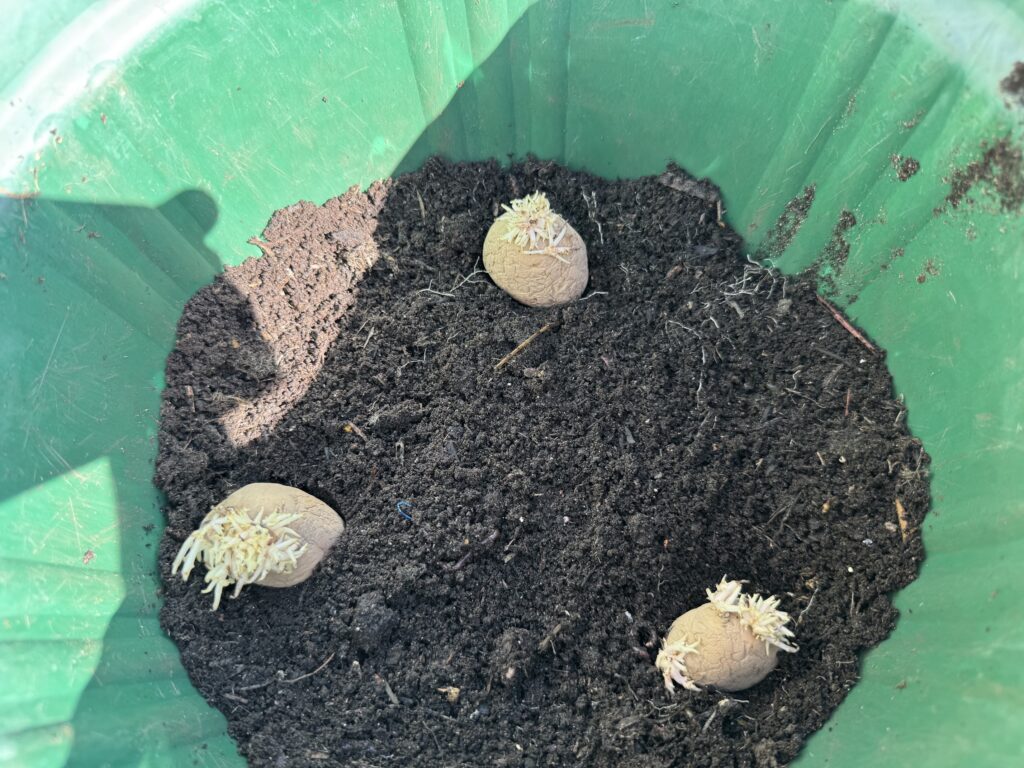
Whether you’re using containers or sacks, you need to fill it about a quarter-half full with compost. Plant potatoes 30cm apart – a large sack will probably take three, the shopping bags will take two. A 30cm pot will take one.
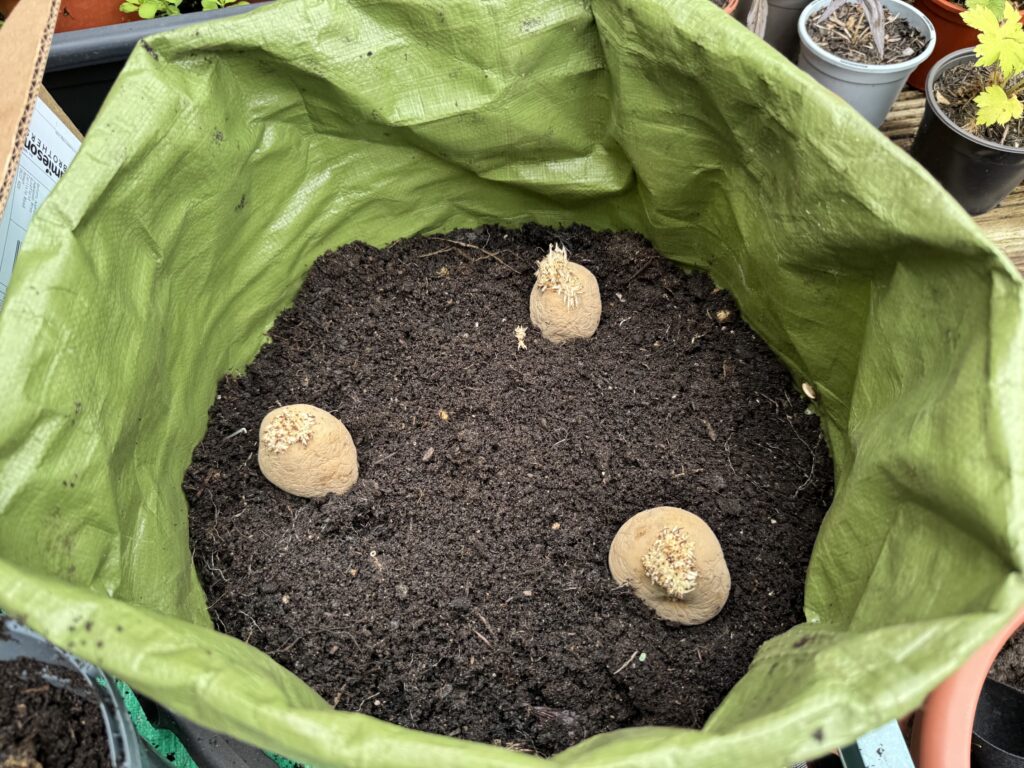
Don’t be tempted to add more potatoes than advised – potato plants need space to grow and if you use too many potatoes, you’ll crowd the area and potentially end up with far smaller a harvest.
Cover with compost to just above the top of the potatoes so they’re completely covered and water well.
When shoots appear, you can begin to gradually add more compost as they grow, continuing to add over the next couple of months as the stems grow taller.
This is known as ‘earthing up’ and the same principle works if you’ve planted them in the ground. Once the soil has reached the rim, it’s worth trying to build it even higher if you can, although it’s not as easy to do this with sacks and containers as it is with potatoes in the ground.
If it’s dry, make sure you keep containers watered throughout autumn and container and sack potatoes should be fed with something like liquid seaweed once you’ve done the first earthing up and regularly after that.
The frost will hit before your harvest and it can damage young plants so if you can find somewhere frost free (greenhouse, sealed cold frame, conservatory or even a porch with lots of natural light) put them in there.
Once the foliage dies back and shrivels up, it can be removed and composted. Ideally, leave the potatoes under the soil for a couple of weeks after the foliage has died before harvesting – it’s said to harden the skins a bit.
Once harvested, store spuds in a cool dark garage or shed and they will last much longer than they will in the fridge – and if all goes well, you could be tucking into your homegrown harvest with your Christmas dinner this year.